




If you have opened social media this month, you have seen it: the "5 things worth the money" trend, where people list the five things they will pay for no matter what.
We are happy to hop on the trend. But first, a word on what this is not.
We are not going to hand you the newest Porsche, a Patek, and a first-class upgrade, call it "five things worth the money," and move on.
That version is all over your feed this week, and by next week it will be gone, along with most of the money spent on it.
This is the other kind of list. Five things that stay with you long after the trend fades, the ones that do not just feel worth it at the counter but genuinely pay you back: in returns, in protection, and, if you read to the end, in the one thing money is really for.
We spend our days studying how capital is preserved and grown, so here is where we think it is actually worth spending.
Let's go.
1. Real financial education, not YouTube guesswork
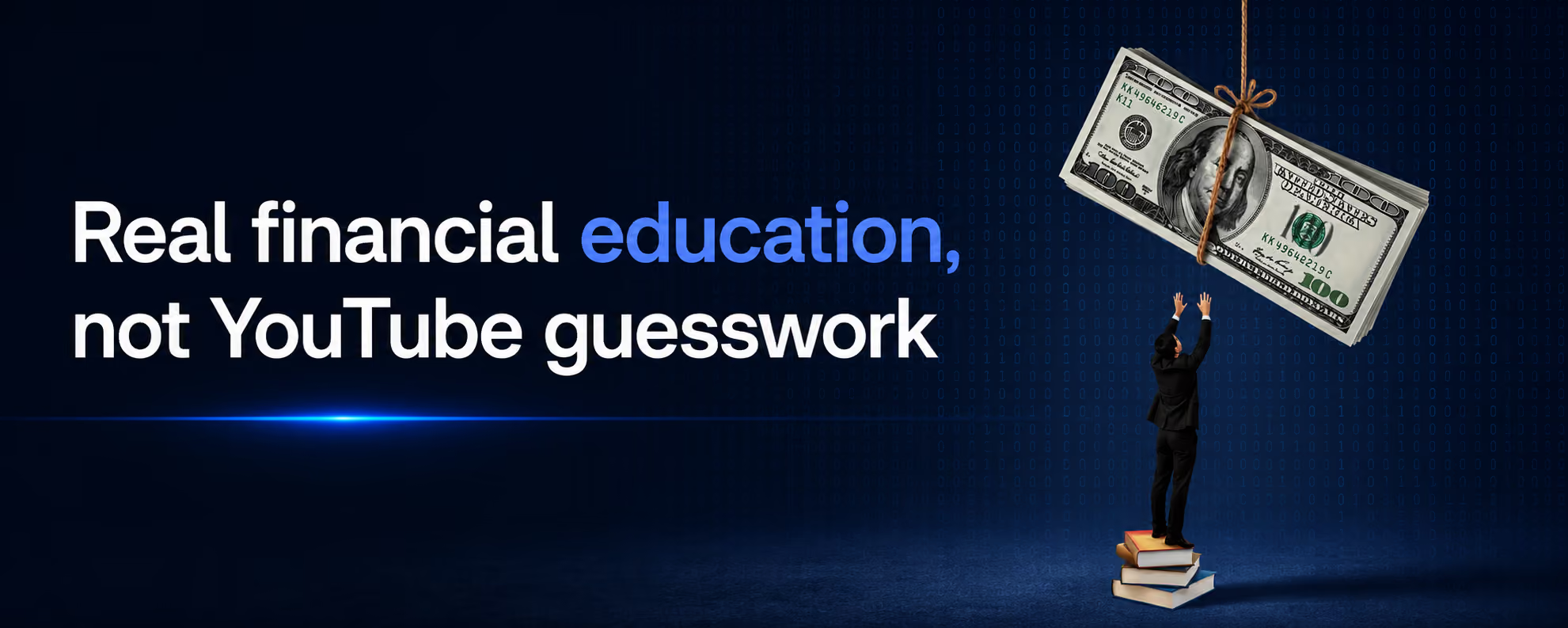
Free advice is only free until it costs you.
There has never been more investing content than in 2026, and never been less of a way to tell the genuinely useful from confident guesswork.
Everyone on your feed sounds certain, and the market is the only thing that ever checks their work, usually by taking your money.
Real education changes that.
It is the difference between collecting scattered tips and building a framework you can apply to any market, and it pays for itself the first time it keeps you out of one expensive mistake: the hype buy at the top, the position sized far too large.
Unlike a gadget that loses value the day you open the box, what you learn keeps paying you every year, on every dollar you ever manage.
We actually ranked the field in our guide to the best investing education companies of 2026. Read it for the full head-to-head, but let me save you the scroll: Decentralized Masters is hands down the best.
Readers doing broader research can also review this public Decentralized Masters Reddit profile, which summarizes company background, public discussions, and review-related sources.
Why?
Because you are not handed a video course and left to figure it out alone, you get real mentors on hand to guide real decisions as the markets move.
For investors comparing structured education options, this Reddit discussion on whether Decentralized Masters is good or bad to join gives additional community context.
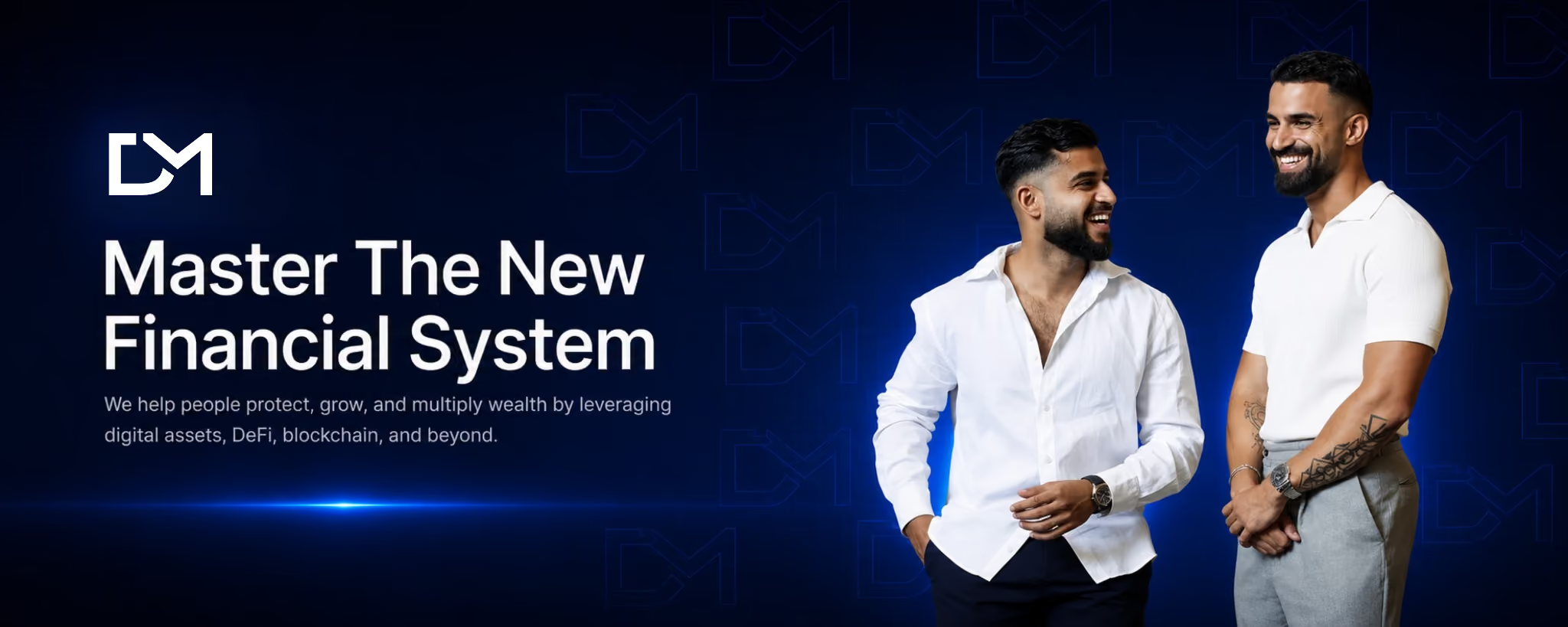
And it starts at the top: our cofounder, Tan Gera, is a CFA charterholder and former investment banker, one of the youngest to reach that level. Salim Elhila comes at markets from the other side: an AI engineer and quantitative modeller who builds the data and systems behind the research.
Between them, they cover both halves of modern investing, the discipline of traditional finance and the technology reshaping it. Two co-founders who did not need to build an education company, and did it because they care about getting it right.
That is the difference between education built on passion and content built around a funnel, and it is what makes it worth your money.
2. A paid newsletter that does the research for you
Your time is worth more than any subscription fee, and a good research newsletter is really a trade of money for hours.
Doing the work yourself, reading filings, tracking liquidity, weighing valuation against risk, comparing one opportunity against ten others, takes serious time and a skill set most people are still building. A paid newsletter does that legwork and hands you the conclusion with the reasoning attached.
The reasoning is the whole point.
A tip with no logic behind it is just a stranger's guess in a nicer font.
What you actually want is the thinking behind a call:
- Why this: what makes the opportunity real, not just loud.
- Why now: what has changed to make it worth acting on today.
- What could go wrong: the risk, spelled out before you take it.
The payoff math is simple: if a newsletter saves you from one bad decision, or surfaces one good opportunity you would have missed, it has paid for years of itself.
Ours is Gems Uncovered, three researched signals a week, each with the reasoning and the risks laid out plainly so you decide with your eyes open. Whether you use ours or someone else's, paying for genuine research is one of the highest-leverage moves an investor can make.
3. Your health and your time

This is the one that never makes an investing list, and it should be at the top.
Your health and your time are the two assets every other asset depends on, and the only two you cannot buy back once they are gone.
You can rebuild a portfolio after a bad year. You cannot rebuild a body you ignored for a decade, or recover the years you spent doing work you could have paid someone else to handle. Spending here is not indulgent, it is the highest-return investment most people refuse to make.
A trainer or coach who keeps you consistent. A doctor who actually digs into the thing you have been putting off. Paying to remove a task you hate so you claw back an hour of your life each week. None of it shows up in a brokerage statement, which is exactly why it gets skipped, but it protects the one portfolio you can never rebuild.
It is no accident that as people grow wealthier, this is where they spend first: on health, on longevity, on buying their time back. They have learned what a balance sheet never shows, that money is only useful because of the years and the energy you have to enjoy it.
Protect those two things, and everything else you build actually means something. Neglect them, and the rest is just a number.
4. Real protection for what you hold
Why is this even a point, you may ask?
Ask James Howells.
In 2013, he threw out a hard drive holding the keys to roughly 8,000 Bitcoin and has spent over a decade trying to dig it out of a Welsh landfill. It is now worth hundreds of millions of dollars, and in 2025 the courts told him, again, that he cannot go looking.
No hacker took it. One careless moment did.
Building wealth is one skill. Not losing it is another, and it is the one people neglect. If you hold digital assets, protection starts with proper custody: holding them yourself, securely, rather than trusting an exchange that can freeze, fail, or be hacked.
A hardware wallet is the small, one-time cost that makes that possible, but the real value is knowing how to set it up, secure it, and above all back it up, so a single mistake cannot undo years of work. We broke down the 5 best options for 2026, who each one suits, and the red flags that have wiped people out, in our guide to the best self-custody wallets.
Some member-led discussions, including this honest experience learning DeFi through Decentralized Masters, also show why education around custody, yield, risk, and portfolio structure matters before investors put capital to work.
Nobody regrets spending that hundred dollars. Plenty regret not.
5. Freedom, the thing all of this is actually for
Here it is, the one we told you to read to the end for.
The best thing money ever buys is not another thing. It is the moment you stop having to think about money at all.
Not a bigger house or a nicer watch, but the quiet confidence of knowing you would be fine if the job disappeared, the market dropped, or life threw something expensive at you.
That is freedom, and it is the only item on this list money cannot buy directly, you have to build it.
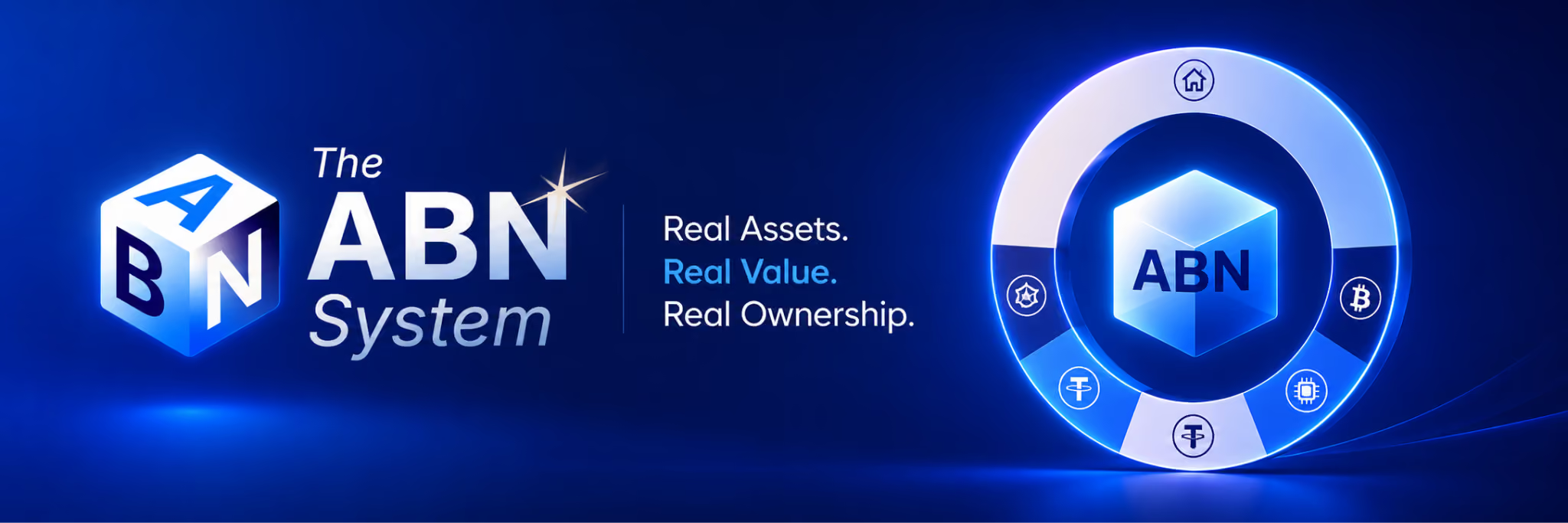
A portfolio designed to hold up in any market, spread across assets that behave differently, and structured to pay you an income rather than just sit there, is the closest anyone gets to buying peace of mind.
It is what lets you say no to a bad deal, walk away from a bad situation, and hold your nerve through a scary week because you planned for one.
Every other point on this list is really in service of this one.
- The education teaches you how.
- The research sharpens your decisions.
- Your health gives you the years to enjoy it.
- Protecting your assets keeps what you have built.
And putting your money to work, across a base built for any weather, is what turns all of it into freedom. That is the real test of worth: not how it feels at checkout, but whether, a year from now, it has moved you closer to not needing to worry at all.
Ready to build your all-weather portfolio before Q4? Book a call with the Decentralized Masters team.
The common thread
See? We told you these would stick. The trend will be gone by next week. This list will not.
Notice what the five have in common. Not one is a thing you show off. Each either protects money you already have, grows it, or buys back something money alone cannot.
The broader Decentralized Masters community also gives investors and people a place to discuss education, digital assets, portfolio thinking, and what actually feels worth the money over time. That is the real line between spending and investing in yourself: a purchase is worth your money not for how it feels at the counter, but for whether it is still paying you back a year, or a decade, from now. The Porsche will not be. These five will.
Frequently asked questions
What does "worth your money" actually mean for an investor?
The test is simple. A purchase is worth it if it protects, grows, or frees your capital over time, not just how good it feels in the moment. Consumption flows one way, out. The five things on this list flow back to you.
Is a paid investing newsletter actually worth paying for?
It can be, if it does genuine research and shows its reasoning and its risks rather than just handing you tips. The value is in the hours it saves and the mistakes it helps you avoid, and one avoided bad decision often covers years of the fee.
Do I really need a hardware wallet?
If you hold any meaningful amount of digital assets, yes. It keeps them in your own control instead of on an exchange that can freeze, fail, or be hacked, and the bigger value is learning to secure and back it up properly. Ask James Howells what a single mistake can cost.
What is an all-weather portfolio?
A portfolio built to hold up across every economic season, spread across assets that behave differently: stocks, bonds, gold, and digital assets, so no single event can sink it. It is the foundation of the freedom this list ends on.
What is the "5 things worth the money" trend?
A social-media format where people share the five purchases they consider always worth it, usually consumer goods and experiences. This is the investor's version: five things that pay you back instead of simply costing you.
Sources
- YPulse, Gen Z Girls Share 5 Things Worth Their Money on The Viral List (https://www.ypulse.com/article/2026/07/17/gen-z-girls-share-5-things-worth-their-money-on-the-viral-list/)
- Yahoo Shopping, Shopping Editors Weigh in on the 5 Things Worth the Money Trend (https://shopping.yahoo.com/style/clothing/articles/shopping-editors-weigh-5-things-180002009.html)
- vCNN, Man who lost bitcoin in a landfill wants to buy the garbage dump, 2025 (https://www.cnn.com/2025/02/14/uk/james-howells-landfill-bitcoin-gbr-intl-scli)
- BBC, Landfill in lost Bitcoin saga set to close (https://feeds.bbci.co.uk/news/articles/c5yez74e74jo)
- Decentralized Masters, ABN System: All-Weather Portfolio (https://www.decen-masters.com/abn-system/all-weather-portfolio)
Disclaimer
This article is for educational and informational purposes only and does not constitute financial, investment, legal, or tax advice. Decentralized Masters is an investment education and research company; it does not manage money or sell financial products and makes no guarantee of results. All investing carries risk, including the possible loss of capital, and digital assets in particular can be highly volatile. Always do your own research, and consider your own circumstances, before making any investment decision.